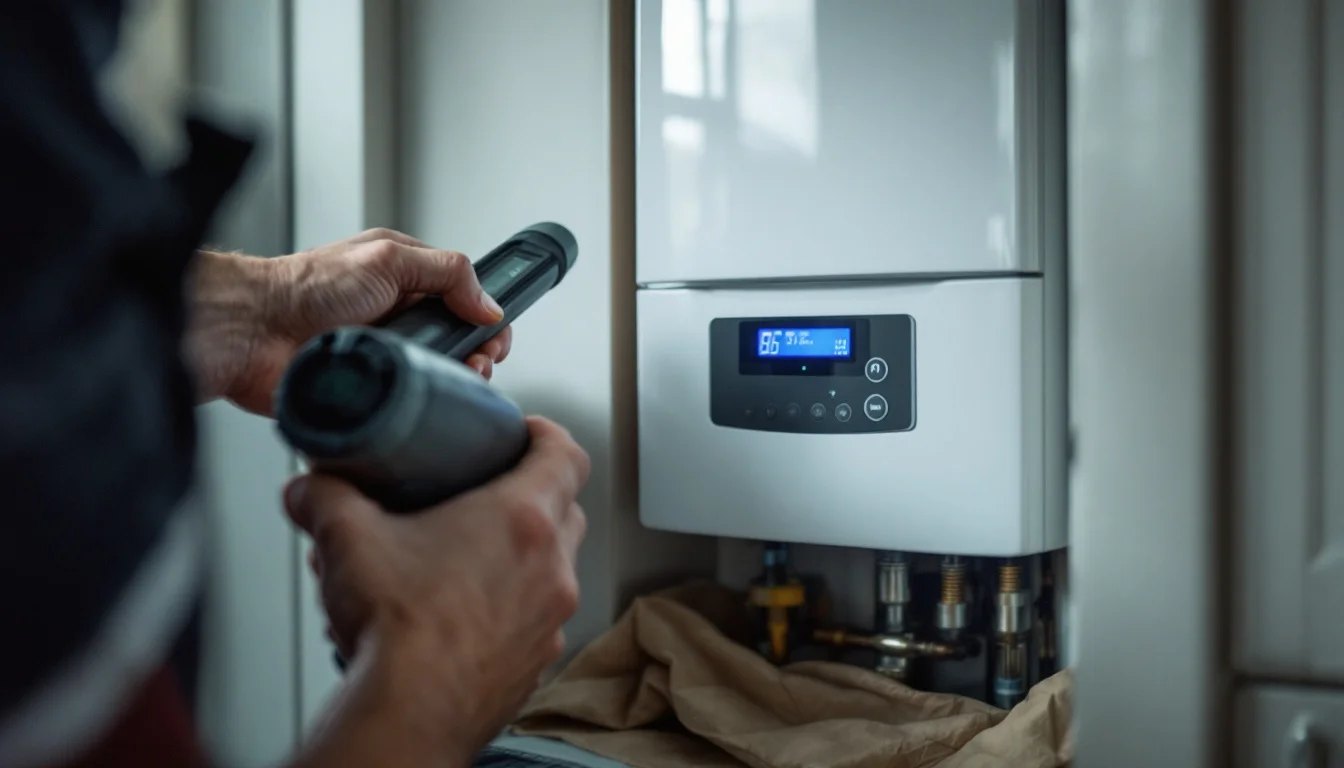
Planning a new boiler installation Poole homeowners can rely on starts with knowing what the job involves, what it should cost and who is legally allowed to do it. Whether you live in a Parkstone villa, a Sandbanks flat or a Broadstone family home, a replacement boiler is one of the biggest heating decisions you will make. This guide covers timing, boiler types, 2026 prices, the rules and what really happens on the day.
Quick answer: A new boiler installation in Poole usually takes one to two days. Gas React’s published prices are from £1,699 for a Glow-worm, from £1,899 for a Vaillant and £1,999 for a Worcester boiler, with the final price confirmed at a free survey. It must be carried out by a Gas Safe registered engineer, who commissions the boiler, fits compliant controls and arranges Building Regulations notification.
Key Takeaways
-
Gas React’s published boiler installation prices start from £1,699 for a Glow-worm, with Vaillant from £1,899 and Worcester at £1,999. A free survey confirms the price for your home.
-
Only a Gas Safe registered engineer can legally fit a gas boiler, so always ask to see their ID card before work starts.
-
Think about replacing once a boiler is 12 to 15 years old, keeps breaking down, or repair bills are climbing.
-
Combi boilers suit most flats and smaller homes, while system or regular boilers suit larger households with several bathrooms.
-
A magnetic filter, good controls and an annual service protect your investment and any manufacturer warranty.
When Is It Time to Replace Your Boiler?
It is time to replace your boiler when it is roughly 12 to 15 years old, breaks down repeatedly, or costs more to keep running than a new one would save. Age is only part of the picture. A well-serviced boiler can outlast a neglected one by several years, so look at the pattern of faults and bills as well as the date on the casing.
Signs that repair no longer makes sense
The classic warning signs are a boiler that keeps losing pressure, loud banging or kettling noises, radiators that stay cold at the bottom, visible leaks, and a pilot light or burner that keeps cutting out. A flame that burns yellow or orange instead of crisp blue deserves immediate attention, because it can point to incomplete combustion and carbon monoxide. If you ever smell gas, turn off the supply and call the National Gas Emergency Service on 0800 111 999 before you call anyone else.
A useful rule of thumb is to question any repair that costs a third or more of a replacement on a boiler that is already past ten years old. Spare parts for older models can also become hard to source. If you are unsure whether yours is worth saving, our guide to boiler repairs in Christchurch explains the common faults and when repair is still the sensible choice. Gas React repairs boilers as well as replacing them, so the advice is not weighted towards one answer.
What a modern condensing boiler changes
A modern condensing boiler turns far more of its gas into usable heat than an older non-condensing unit. Today’s models typically run at 90% efficiency or better, while boilers fitted in the 1980s and 1990s, still common in older Poole bungalows and houses around Canford Heath and Broadstone, often waste a substantial share of what they burn. The Energy Saving Trust explains that modern condensing boilers are more efficient than older models because they reuse heat that would otherwise be lost.
The gains grow when the boiler is paired with sensible controls. A room thermostat, programmer and thermostatic radiator valves stop you heating empty rooms, and smart controls installation lets you adjust the schedule from your phone. There is currently no ban on installing a gas boiler in an existing UK home, so a replacement remains a perfectly legitimate choice, and the savings start from the first winter.
Which Boiler Type Suits Your Poole Home?
A combi boiler suits most flats and homes with one or two bathrooms, while a system boiler suits larger households that need hot water in several places at once. A regular boiler still makes sense where an existing tank-fed system works well and you do not want to change the pipework.
Combi, system and regular boilers compared
A combi boiler heats water on demand from the mains, so there is no cylinder or loft tank. That frees up space, which is a real benefit in the compact flats around Poole Quay and Lilliput. The trade-off is that two showers running at once will strain it, and it needs decent mains pressure and flow. A quick pressure and flow check at survey stage avoids disappointment later.
A system boiler works with an unvented hot water cylinder, which delivers mains-pressure hot water to several bathrooms at once. It suits bigger family homes in Canford Cliffs and Parkstone. A regular boiler, sometimes called a conventional boiler, works with a cold water tank in the loft and a vented cylinder. It copes well with older plumbing and low mains pressure, but takes more space. Customers who want to ditch their tanks sometimes ask about a combi conversion, which involves removing the cylinder and loft tanks and re-plumbing, so it takes longer and costs more than a like-for-like swap.
Controls and the Boiler Plus rules
Since April 2018, the government’s Boiler Plus requirements in England have set a minimum efficiency of 92% for new gas boilers and insisted on time and temperature controls. Combi boilers must also come with at least one extra energy-saving measure, such as a smart thermostat with automation, weather compensation or flue gas heat recovery. Your installer should explain which option they are fitting and why.
Radiator control is the other half of the puzzle. Fitting thermostatic radiator valves lets each room settle at its own temperature, which helps the boiler run less often and for shorter bursts. Under Building Regulations Part J, a carbon monoxide alarm is also expected in the room where a new fixed combustion appliance is installed, so ask for one to be included in the quote.
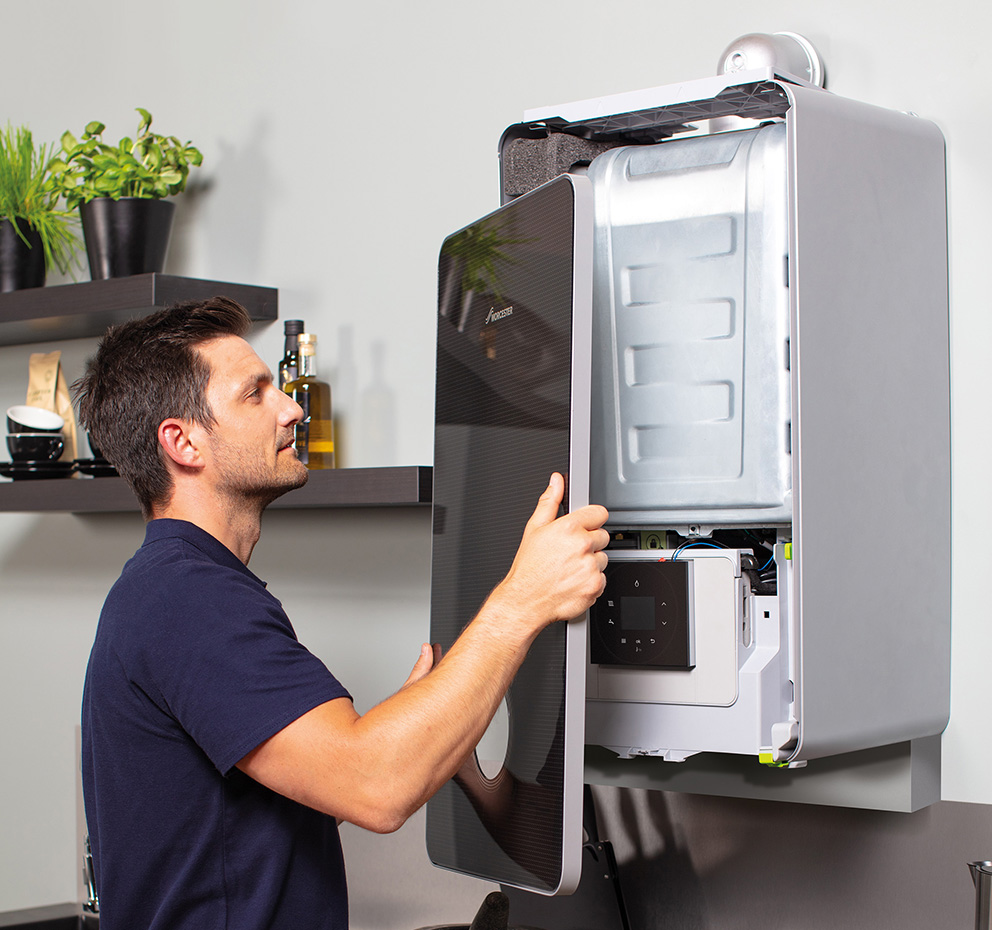
New Boiler Installation Costs in Poole for 2026
Gas React publishes its new boiler installation prices on its website, starting from £1,699. The final figure depends on the boiler you choose, the work around it and the condition of your existing system, which is why every quote follows a free survey of your home.
Gas React’s published prices
The table below shows the starting prices for the three boiler brands on Gas React’s current offers. Moving the boiler, a combi conversion or extra pipework will add to the price, and the survey sets out exactly what is included.
Be wary of any quote that looks far cheaper than the going rate. It may leave out the filter, the controls, the disposal of the old boiler or a proper commissioning visit, any of which can reappear as an extra later. Compare quotes line by line rather than on the headline number alone.
What pushes the price up or down
Moving the boiler to a different wall, lengthening the flue, replacing old pipework or running a new condensate drain all add labour and materials. Extras that protect the system are worth budgeting for. A magnetic system filter from Gas React starts from £150 plus VAT and captures the black sludge that damages boiler heat exchangers, while a power flush for a tired system starts from £280 plus VAT.
Gas React works across Poole, Bournemouth and the surrounding area with the same team. If you are comparing the two areas, our page on new boiler installation in Bournemouth covers the same process. Whoever you choose, ask for a clear, written, itemised quote. One customer review on the Gas React website praises a “very clear and detailed quotation and accurate billing”, which is exactly what you should look for.
What Happens During a New Boiler Installation Poole Homeowners Can Expect
A typical job runs from a home survey and written quote to a one or two day installation, followed by commissioning and handover paperwork. The engineer should complete everything on the same visit that makes the boiler safe, legal and ready to use.
The survey and quote
A good survey is more than a measuring tape. The engineer checks the gas supply pipe size, the route and position of the flue, where the condensate pipe can drain, the state of existing pipework and radiators, and the mains water pressure and flow. In coastal Poole, they will also look at how exposed an external flue or condensate pipe is to wind and winter cold, because a frozen condensate pipe is one of the most common reasons a new boiler stops working in a cold snap.
The survey is also the time to raise the practical questions. Where will the old boiler and any redundant tanks go? Do you want a smart thermostat? Is the system sludgy enough to need a flush or filter? One customer who had a new boiler fitted wrote in a review that the engineer highlighted potential issues in advance and already had the solutions in mind, which is the mark of a thorough assessment.
Installation day and handover
On the day, the system is drained, the old boiler is disconnected and removed, and the new boiler is mounted and connected to the gas, water, flue and condensate pipework. The system is then filled, treated with inhibitor, flushed as needed, and commissioned. Commissioning means the engineer tests gas pressure, combustion and flue gases, checks safety devices and completes the manufacturer’s commissioning checklist, often recorded in a Benchmark logbook.
A Gas Safe registered installer then notifies Building Control through the Gas Safe Register, and you should receive a Building Regulations Compliance Certificate in the following weeks. Keep it with your boiler paperwork, because buyers’ solicitors and insurers often ask for it. Before the engineer leaves, they should show you the controls, register the manufacturer’s warranty if needed and leave the area tidy. Many manufacturer warranties depend on annual servicing, so book annual boiler servicing in Poole a year after the install to keep your cover valid.

Why Poole Homeowners Choose Gas React
Gas React is a heating and plumbing business serving Poole, Bournemouth, Christchurch, Ferndown, West Moors and the wider Dorset area, with fully qualified Gas Safe engineers who specialise in the design and installation of domestic heating and hot water systems. The team installs, services and repairs domestic gas appliances, and also handles general plumbing.
Local experience you can check
The team at Gas React has built its name over more than 20 years of work across Bournemouth, Poole and surrounding areas, and the reviews on its website say a lot about how it works. Customers describe engineers who arrive when they said they would, work quickly and neatly, and take away the old boiler, pipes and rubbish so nobody is left wondering how to dispose of them. One reviewer who had spoken to several installers for a new boiler noted that Gas React was the only one to turn up on time, and others praise the clear communication by text and the tidy finish.
Because the same team covers new boiler installations, boiler repairs, servicing, radiators, powerflushing, hot water cylinders and wider plumbing work, one visit can often sort out several jobs. If the new boiler is the first step in a wider upgrade, that saves you coordinating several different tradespeople.
Questions to ask any installer
Whoever you choose, a few questions will quickly separate professionals from the rest. Ask to see their Gas Safe ID card and check that it lists gas boilers as a type of work they are registered for. Ask who will notify Building Control and when you will receive the certificate. Ask what is included in the price, particularly the filter, controls, carbon monoxide alarm and disposal of the old boiler, and what warranty comes with the boiler and with the workmanship.
You should also expect a written quote, proof of insurance and honest advice about whether you need a new boiler at all. If an installer pushes you to sign on the spot, or cannot explain why they have recommended a particular boiler size, keep looking.
Frequently Asked Questions
How long does a new boiler installation Poole homeowners book usually take?
A straightforward like-for-like swap usually takes one day, and a system or regular boiler swap one to two days. A combi conversion, where tanks are removed and pipework altered, can take two to three days. Your engineer should give you a clear timetable at survey stage.
Do I need Building Regulations approval for a new boiler?
Yes, replacing a boiler is notifiable work under Building Regulations. A Gas Safe registered installer is a competent person and notifies Building Control for you, after which you should receive a compliance certificate. Keep it safe, as it is often requested when you sell the property or make an insurance claim.
Is it worth replacing a 15-year-old boiler that still works?
Often yes. A boiler of that age is likely to be less efficient than a modern condensing model, may be harder to repair and could fail at the worst time. If it has been serviced every year and runs well, you can wait, but budget for replacement.
Can I get help paying for a new boiler?
Support changes regularly, so check gov.uk for current schemes and eligibility. The Boiler Upgrade Scheme currently covers heat pumps rather than gas boilers, while some households on certain benefits may qualify for other energy efficiency support. Ask your installer what payment options they can offer.
How often should a new boiler be serviced?
Once a year. An annual service keeps the boiler running efficiently and safely, helps spot small faults early and is usually a condition of the manufacturer’s warranty. Landlords have a separate legal duty to arrange a gas safety check every 12 months.
If you are weighing up a new boiler installation Poole homeowners can feel confident about, the team at Gas React can talk through your options, survey your home and put the details in writing. Whether you also need power flushing so the new boiler is not working against old sludge, or just want straight advice, call 01202 028 171 or book a free survey online and we will help you plan the job from first visit to final handover.